Key Insights:
- AI workloads are rapidly increasing rack density requirements, pushing facilities toward liquid cooling and forcing designers to plan for much higher power and thermal loads from the outset.
- Power availability has become the main driver of site selection, with grid connection timelines stretching into years in some markets and forcing developers to address energy strategy at the feasibility stage.
- Sustainability expectations now extend beyond PUE to include embodied carbon, water usage, and lifecycle resilience, meaning environmental considerations must be integrated into engineering decisions early.
- Data Centre investment is becoming more regionally selective, with growth concentrating in locations where power access, planning conditions, and infrastructure capacity support large-scale development.
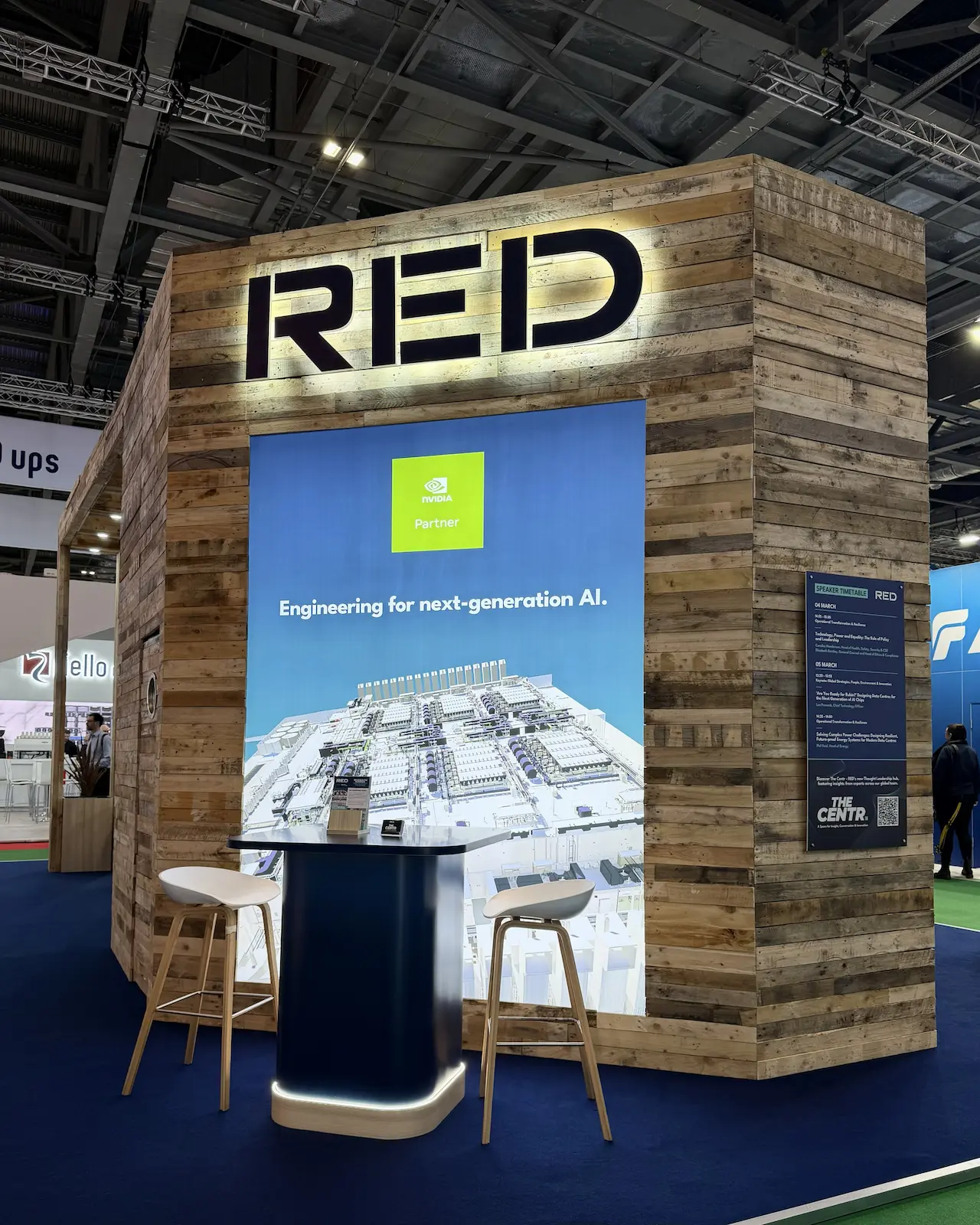
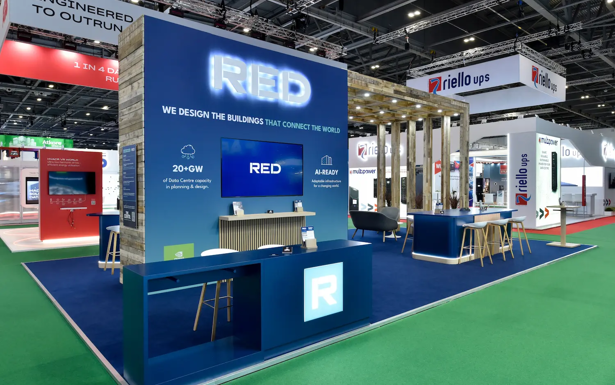
As the Data Centre industry moves into 2026, several pressures are becoming harder to ignore. AI compute demand is increasing quickly, yet infrastructure delivery is struggling to keep up.
Grid capacity is tightening across Europe, the UK and parts of Asia-Pacific, and sustainability commitments are increasingly being written into contracts as a commercial and regulatory reality. And capital, after years of near-unconstrained deployment, is becoming more disciplined about where it goes and why.
Data Centre World London offered a useful opportunity to take stock. Much of what we heard reflected what we are already seeing across projects, with a few areas becoming clearer. The same five themes kept coming up - in panel sessions, in conversations between meetings, and in the questions operators and developers are bringing to our engineering teams. Here is how we see them.
The five defining data centre themes of 2026
Five defining trends are set to transform Data Centre development in 2026, from design through delivery.
AI workloads are changing the design brief
Two years ago, a 15kW rack was considered high density - today it is baseline. AI training and inference workloads are already pushing many facilities towards 40, 60 or even 80kW per rack - with some GPU clusters exceeding that. As a result, the conversations at the feasibility stage have changed.
Clients aren’t asking whether their facilities need to support these densities; they’re asking how to deliver them quickly, and without driving costs out of control.
Liquid cooling, once a niche solution for edge cases, is becoming the primary infrastructure choice for AI-oriented facilities, and thermal modelling has to happen earlier in the process, before layouts are locked in - rather than retrofitted later.
Future density can’t be an afterthought either. Designing only for current workloads without building in room for increases is one of the most common and costly mistakes we see, so flexibility has to be engineered in from day one.
At RED, we test performance at the design stage using CFD simulation tools including, 6SigmaDCX and our proprietary BRIZA platform, which is where the decisions that matter most are still reversible.
Find out more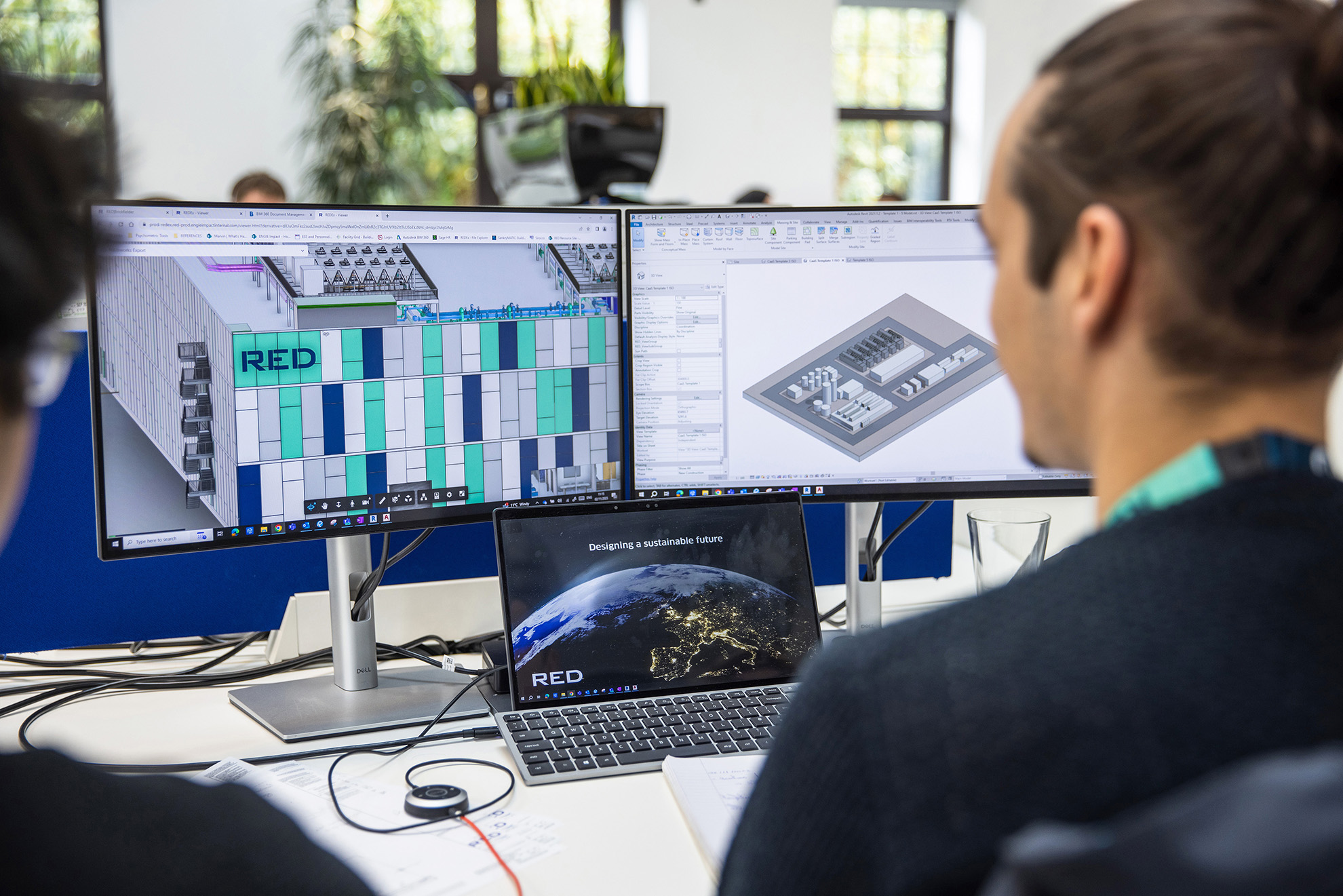

Power now drives site selection
We’ve written before about the rising power demands of Data Centres, and the industry is now beginning to align with that reality - with power becoming one of the primary factors in site selection decisions.
Grid connection timelines in the UK, Ireland, the Netherlands, and Germany are measured in years rather than months - and in some markets, on-site generation is moving from a backup solution to their main supply strategy. Projects that ignore this carry programme risk from the very start.
RED works with clients on power strategy from the earliest stages of feasibility - modelling grid connection capacity, evaluating alternative generation options, and providing a realistic view of programme timelines before any capital is committed. We also draw on the wider ENGIE and Tractebel network to help clients navigate complex energy markets and policy environments when projects span multiple jurisdictions.
Independent, engineering-led advice at the front end is valuable because commercial pressures often push optimistic assumptions about grid access, and getting an honest assessment early affects every decision that follows.
Sustainability is maturing past Power Usage Effectiveness (PUE)
PUE remains an important metric (and has also become a commercial KPI for operators), but in 2026, the sustainability conversation has moved well beyond it. The metrics that matter most to investors, regulators, and enterprise clients now include embodied carbon, water usage effectiveness, and long-term operational resilience.
Certifications like BREEAM, LEED, NABERS, and WELL carry real commercial weight, but they need to be backed by genuine engineering analysis - the kind that we offer at RED. Our Sustainability Solutions and Climate Change team works across the full lifecycle of a project, using in-house embodied carbon tools to assess materials selection, construction methods, and operational configuration together.
The goal is a sustainability strategy that holds up to scrutiny: one where targets are evidence-based, and design decisions actually deliver on them. It sounds straightforward, but in practice it requires embedding environmental thinking into the engineering process from day one, not bolting it on at the end.
Find out more

Speed and resilience are not a trade-off
Programme pressure is intense across every segment of the market right now. Hyperscale operators are accelerating deployment timelines, and colocation providers are compressing design-to-delivery cycles to meet demand. The commercial logic is clear, but the cost of getting it wrong can be high: facilities that need major modifications early, or fail to meet client and regulatory resilience standards, are expensive problems.
The good news is that speed and resilience can go hand in hand. Parallel workstreams, standardised design components, early supply chain engagement, and clear technical oversight across teams make fast delivery possible without adding risk.
RED’s global model, with offices across the UK, Europe, the Middle East, Asia-Pacific, and Australia, and a design office in Manila, is built to deliver exactly this: structured, high-quality projects at pace.
Find out moreData centre growth is becoming more regional
While demand is global, market conditions are not. Data Centre investment is increasingly focusing on locations where power availability, planning certainty, and operating conditions are favourable.
As a result, growth is starting to diverge across regions. Northern European markets are tightening as power constraints and planning pressures increase, while Southern and Central Europe are attracting new investment. The Middle East is seeing large government-backed hyperscale programmes, and in Asia-Pacific the picture varies widely - with some of the world’s most mature data centre markets sitting alongside some of the fastest-growing emerging ones.
RED has active projects in 31 countries, and our regional teams carry genuine local knowledge - of planning systems, utility relationships, and market dynamics - alongside our global engineering standards.
In 2026, we are expanding further in Southern Europe with a new office in Madrid.
A deliberate move into one of the fastest-growing data centre markets in the EMEA region. Improving grid infrastructure and clearer planning conditions are attracting strong hyperscale interest in Spain, and we want to be there to support clients as more projects come forward.
Find out more
What this means for clients in 2026
In our conversations across Data Centre World London, the message was clear: these five themes are closely linked, and projects tend to run into difficulty where they overlap. Planning for them from the outset is what separates well-governed data centre development from the rest.

Feasibility
Power availability needs to be the first question, not something addressed later. RED supports clients with power‑first decision-making, combining early grid engagement, risk mapping, and realistic programme planning to filter sites quickly and avoid late-stage surprises. Feasibility is also where density assumptions matter most: the facility being designed today must be able to support higher power and cooling demands in future. That’s why RED also reviews planning constraints, sustainability opportunities, and potential for phased growth - helping clients make investment decisions grounded in both technical and commercial reality.

Design
Design is where density forecasting, flexibility, and phasing come together. RED models multiple load scenarios, designs to allow scaling, and structures infrastructure so that future upgrades can be delivered with minimal disruption to live operations. This includes defining resilience strategies, selecting cooling and power architectures, and balancing carbon, cost, and performance in line with client priorities. Sustainability analysis (embodied carbon, lifecycle modelling, and water usage planning) is embedded at this stage, so it can meaningfully influence structural and systems decisions.

Delivery
Programme risk often accumulates during delivery if multi-disciplinary coordination is not tightly managed. RED provides technical governance across MEP, ICT, security, sustainability, and structural teams, aligning contractors, OEMs, and specialist vendors with clear performance outcomes. Supply chain constraints and commissioning complexity are addressed through structured testing, verification, and handover processes, ensuring the facility that enters operation delivers as designed.

How RED is positioned for 2026
RED has been delivering Data Centre projects since 2004, with over 1050 commissions across 31 countries and a team of over 900 across 16 offices. Our senior management brings a combined 700 years of sector experience, and as part of Tractebel within the ENGIE Group, we can draw on wider infrastructure and energy expertise.
Our Uptime Institute credentials are extensive: 30+ Accredited Tier Designers, 55 certifications across 26 Data Centres, and a series of industry firsts - including the first Tier III and Tier IV certified designs outside the United States, and the world’s first Tier III certified modular Data Centre.
What we’ve found, particularly in the current market, is that the most valuable thing an engineering team can offer is independence and honesty. Commercial pressures can push optimism on timelines, underestimation of constraints, or sustainability strategies that look good on paper but don’t hold up in execution. Our role is to give clients an accurate picture - and then help them build something exceptional within it.
That approach has guided us since the beginning, and it remains the right one for 2026.
Looking ahead
2026 will be a year defined by precision in power planning, design flexibility, and technical governance across increasingly complex delivery programmes. Success will go to the operators and developers who plan realistically and leverage engineering expertise from the start.
RED’s experience shows that the right decisions at feasibility, design, and delivery are what separate projects that perform from those that struggle. For any Data Centre project in 2026, having that expertise on hand from the start is critical.